
Sound Deadening In San Diego
Mobile install at your home or workplace, from Oceanside to Otay Mesa. Written estimate within 24 hours.
Most road noise is a panel vibrating, not sound coming through the wall.
Sound deadening settles those panels down. We treat the door, floor, roof, or firewall with material that stops the sheet metal from moving, and a lot of what you hear as road noise goes with it.
Road noise is not one problem. A door that buzzes on the 5 is a different problem from a floor pan that hums at freeway speed, and each one has a different fix.
What It Will Not Fix
The industry calls this sound proofing. Nothing we install makes a car soundproof, and anyone who tells you otherwise is selling you a number instead of a result.
A noisy tire is a tire. Some tread patterns are loud on concrete, and the fix is a different tire, or noticing whether the noise moved after a rotation.
A leaking door seal is a seal. Wind at the top of the window, or water in the footwell, points at the seal or the door fit, and material inside the door will not close that gap.
A bad wheel bearing is a bearing. It hums, it changes with speed, and it often changes again in a turn. That is mechanical work, and it needs to be diagnosed first.
Exhaust drone through the floor is exhaust. A leak, a missing resonator, or a system that was never quiet will keep droning no matter what goes on the floor pan.
Four Things Deadening Does, And Why They Get Confused
Damping. Butyl with an aluminum skin, stuck straight to the metal. When the panel flexes, the butyl is forced to move between the steel and the aluminum, and that movement turns into heat. This stops a door skin buzzing, and it is the only one that changes how the panel itself behaves.
There are four separate jobs in here. They use four different materials, and most of the bad advice online comes from mixing them up.
Decoupling. Two panels that sit close together will rattle against each other. A soft layer between them stops it, and the important word is soft. Foam that is stiff passes the vibration straight through, which is why the cheapest material does the least.
Absorbing. A fibrous mat in a cavity or on the back of a trim panel takes some of the sound out of the air. It needs an open, porous material to work, and closed-cell foam is not that material, no matter what the packaging says.
Blocking. Mass-loaded vinyl or Lead Sheet, the heavy barrier for noise coming in from outside. It has to cover a whole panel with no gaps, because sound goes around an edge the way water does. Half a floor pan covered is close to half a floor pan wasted.
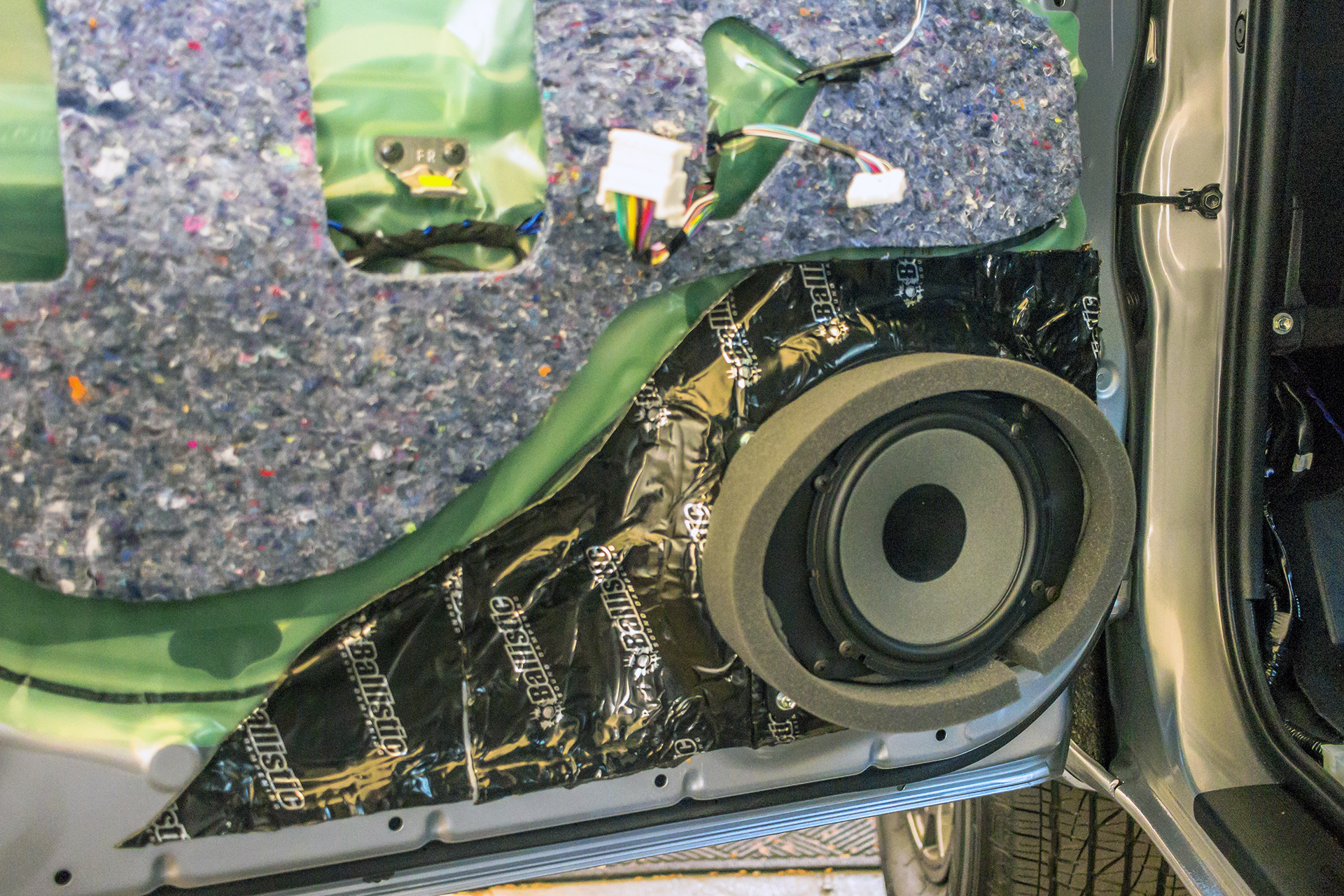
A door gets the first two and often the third. A floor gets the barrier. We match the material to the panel and the purpose instead of selling one product for every job.
Tell Us Which Noise You Are Chasing
This is the first thing we sort out on a quote, because the material list changes with the answer.
Quieter on the freeway. Doors first, then the floor and the wheel wells, then the roof on a truck, van, or RV. That is roughly the order in which noise enters most vehicles.
Bass that hits clean. Doors, the roof, and the rear deck and trim behind the back seat. A door panel that flexes eats the energy the speaker just made, and a roof panel that drums smears the low end. The floor barely matters for this one.
A rattle you cannot find. Usually not a panel that needs material. It is a clip, a seam, or two panels touching, and the fix is often small. We find it before we quote it.
Most customers are chasing the first one. Some are chasing the second and do not care about road noise at all.
Before You Buy Material
People bring us material they found online, and about half of it does not belong in a car.
Here are some of the common mistakes that we see from people outside of the industry:
Peel and seal from the hardware store. Bitumen, not butyl, and a free layer instead of a constrained layer. It melts in a hot car, it smells, and it does not damp the panel the way a proper sheet does. We will not install it.
Gym mats and yoga mats. They look like a decoupler and they are too stiff to be one. Same story with the ensolite foam a lot of kits ship with.
Rolls and embossed patterns. Both mean cheap construction. A good sheet is flat and comes in squares.
Heating it to make it conform. Do not. Heat is what makes cheap butyl fail two summers later.
Small pieces everywhere. One large piece works better than twenty small ones, even when the large piece has to cross a ridge. What matters is how much bare panel is left, not the percentage you covered. We actually used to be guilty of this one
Sealing the big service holes with deadener. Those holes are there so the window regulator can be reached. They get a rigid panel with a gasket, not a sticker.
Doors First, Because That Is Where The Bass Lives
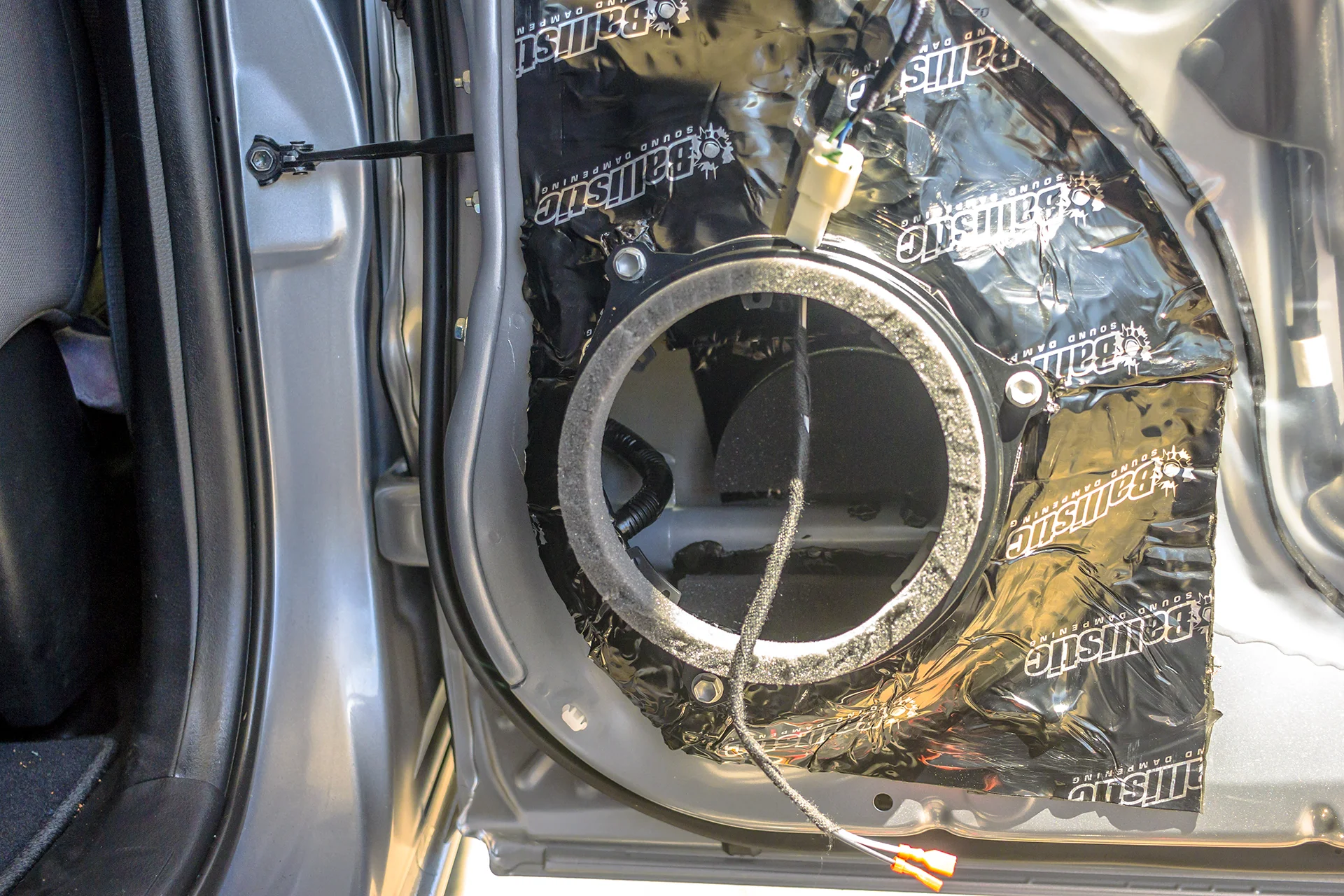
Most of the work we do is doors, because a panel that flexes turns the energy the speaker just made into a flap. You hear it as bass that is present but thin, or a drum hit that flaps instead of thumps.
If speakers are on your list, deaden the door while it is open, because the panel comes off for the speaker either way. That work is on our car audio installation page, and the panels and clips that come off are in this 2018 Toyota Tacoma post.
What The Day Looks Like
We start by pulling panels. Door cards, sill trim, and the seats, if the floor is part of the job.
Every surface gets cleaned first, because material will not stay stuck to dust. The sheet is cut to fit, then rolled by hand so it sits in full contact with the metal.
It goes back together with new clips where the old ones gave up, and we drive it on rough pavement before we hand over the keys. If something buzzes, we want to hear it, not you.
How We Quote
This work is a bit of an art to get right, and we do not quote it off a menu, because both the material and the labor follow the panel count.
Most projects like this are billed as time and materials. The estimate you get back lists the rate and the hours we expect, so you can see how the total is built instead of guessing at it.
The same tech who quotes the job installs it, so nothing gets lost between the person selling it and the person taking your car apart.
You get that in writing within 24 hours, before we schedule anything.
Where We Work, And Our Credentials
We come to you. Driveway, carport, or the garage at work, from Oceanside down to Otay Mesa and east out to Julian. Seven days a week, 10 am to 6 pm.
We are MECP certified; we have been in the trade for more than 25 years, and every install carries our lifetime workmanship guarantee. If a panel we had off starts rattling, we will make it right.
If you are not sure whether we cover your street, the service area page lists every city we travel out to. Every service we offer is on the services page.
MECP certified
Certified installer, not a subcontracted crew.
25+ years
In the trade, on these vehicles, in San Diego.
Lifetime workmanship
Every install carries the guarantee.
Request An Estimate
Send the year, make, model, and trim, your zip code, the noise you are trying to get rid of, and whether speakers are part of the plan. We send a written estimate back within 24 hours.
If you have material or speakers already, send the exact make and model or a link to the product. We will tell you whether it belongs in the car before anything gets stuck to the metal.
If you are not sure what the noise is, tell us when you hear it, and we will help you sort it out!